 ultimate-guide
Cost of Professional TV Mounting Service: What to Expect
Table of Contents
- What Drives the Cost of Professional TV Mounting Service
- TV Installation Cost Breakdown: Labor, Mount, and Add-Ons
- How TV Wall Mount Installation Pricing Changes by Mount Type
- Wall Type and Installation Difficulty: Drywall, Brick, and Concrete
- Hide TV Wires in Wall: Cable Management Costs and Options
- How Long Does TV Mounting Take?
- DIY vs. Professional Installation: Pros, Cons, and Hidden Costs
- How to Compare Quotes and Questions to Ask
- Frequently Asked Questions
Last Updated: October 18, 2026
What Drives the Cost of Professional TV Mounting Service
The cost of professional tv mounting service depends on four things: the mount you choose, the wall the TV hangs on, how much cable work is involved, and whether the job needs more than one technician.
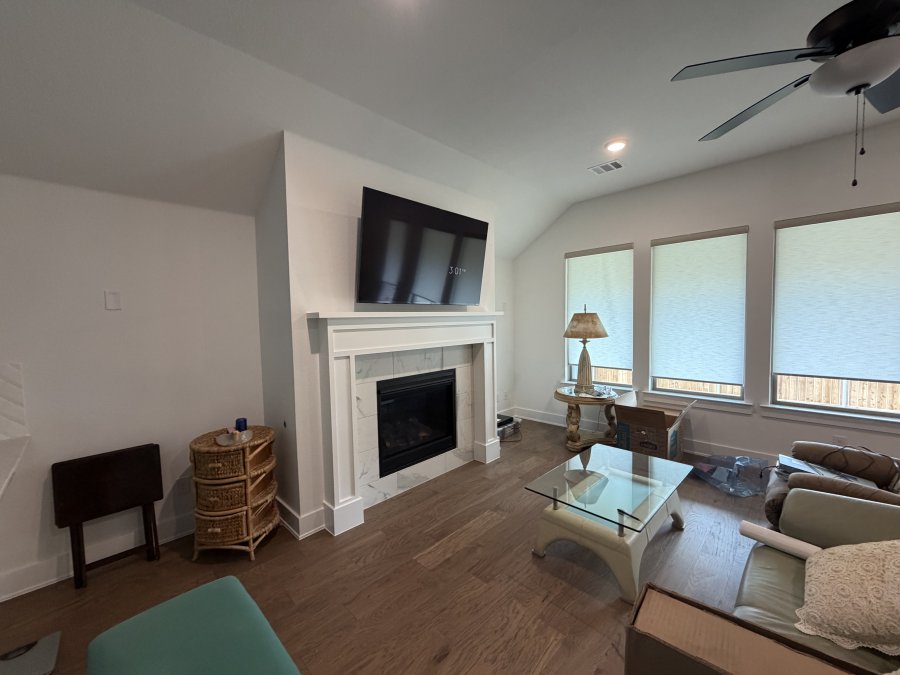
Here's the framework we use to explain pricing to homeowners:
- Mount type sets the hardware cost and the install time
- Wall construction decides the anchoring method and the risk
- Cable management is the biggest variable add-on
- TV size and weight determine how many people are needed
Below, we break down each of those factors, show what a fair quote should itemize, and give you the exact questions to ask before you book anyone.
TV Installation Cost Breakdown: Labor, Mount, and Add-Ons
Most cost guides stop at "labor, mount, and add-ons" without showing what those buckets contain. Before comparing TV mounting quotes, understand which lines should appear on one.
A complete professional TV mounting quote usually has five line items, not three:
- Labor, technician time for layout, anchoring, mounting, leveling, and cleanup
- Mount hardware, the bracket itself, plus any spacers, adapters, or VESA conversion plates your panel needs
- Cable management, surface raceway, in-wall routing, wall plates, or a media box
- Electrical work, a new or relocated receptacle behind the TV, which is a separate trade
A single advertised starting number almost always covers labor plus a basic fixed mount on drywall with an existing outlet nearby; everything else is priced on top. That is how the industry quotes, but it means two "starting at" numbers can describe very different jobs.
What a basic installation typically includes
A basic single-TV installation generally covers:
- Fastening a fixed or tilting mount into wood studs through drywall
- Hanging and leveling the TV
- Connecting the TV to an existing outlet and an existing source device
- Basic cleanup and hauling away packaging
What is usually priced separately
- Full-motion or ceiling mounts and the heavier anchoring they require
- In-wall cable routing and wall plates
- Adding or relocating an outlet (electrician)
- Soundbar, surround sound, or home theater setup
- Masonry, stone, or fireplace walls
Why labor is not one flat number
Labor scales with difficulty, not just screen size. A fixed mount on drywall with an outlet in place is a short visit; a full-motion mount on a brick fireplace with in-wall cable routing is a half-day project that may involve two technicians and a follow-up electrician visit.
For pricing on your specific setup, get a free quote from All Around Technologies LLC rather than relying on a national average. We will itemize the quote so you can see exactly what each line covers.
How TV Wall Mount Installation Pricing Changes by Mount Type
TV wall mount installation pricing tracks closely to mount type because each design demands different hardware and different labor.
| Mount Type | Movement | Install Complexity | Best For |
|---|---|---|---|
| Fixed | None, sits flat | Lowest | Rooms with one seating position |
| Tilting | Tilts up or down | Low to moderate | Mounts above eye level |
| Full-motion | Swivels, extends, tilts | Highest | Corner placement, wide rooms |
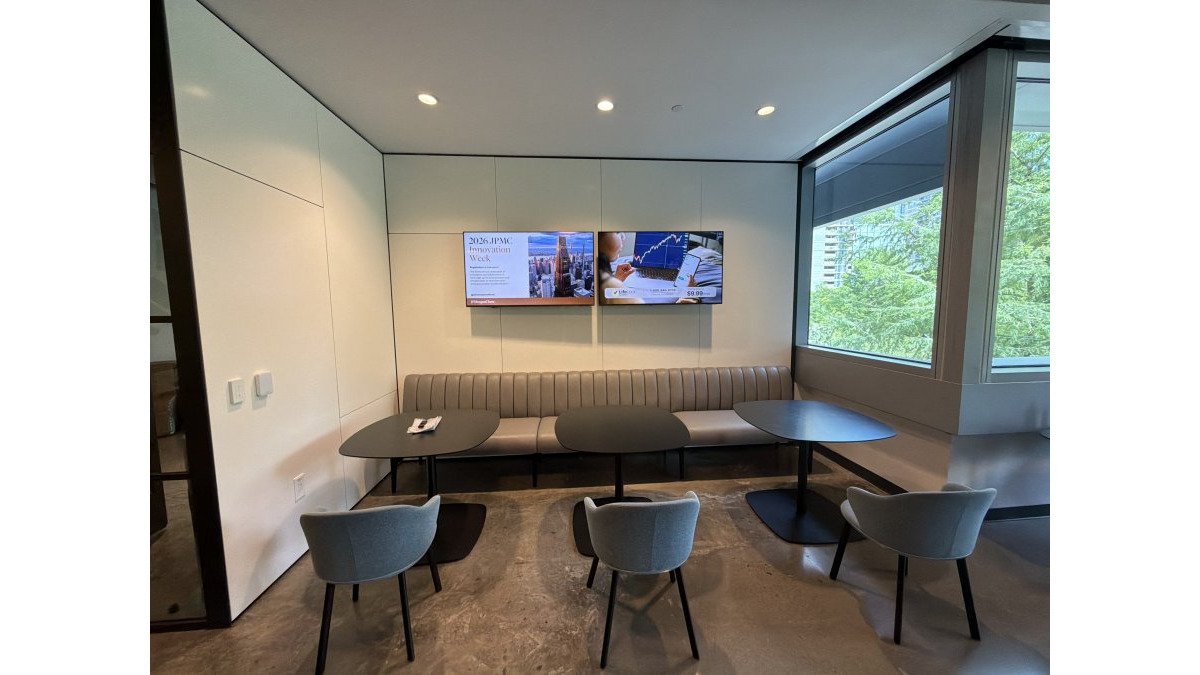
| Ceiling | Hangs from above | Moderate to high | Commercial spaces, unique layouts |
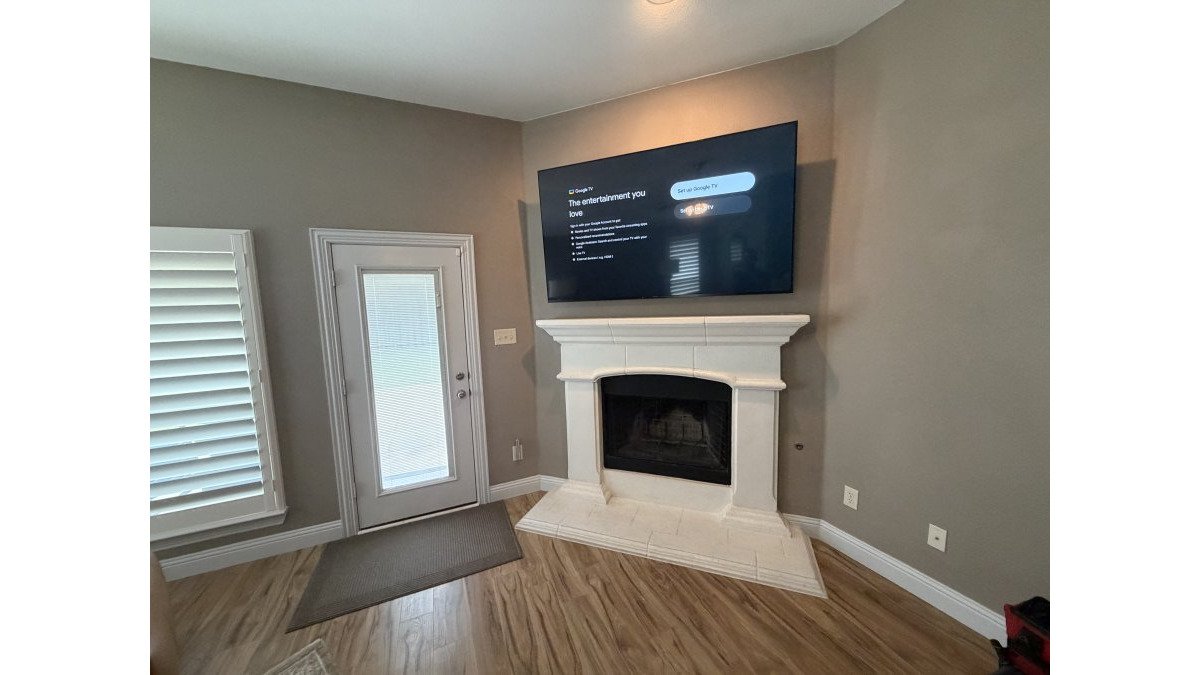
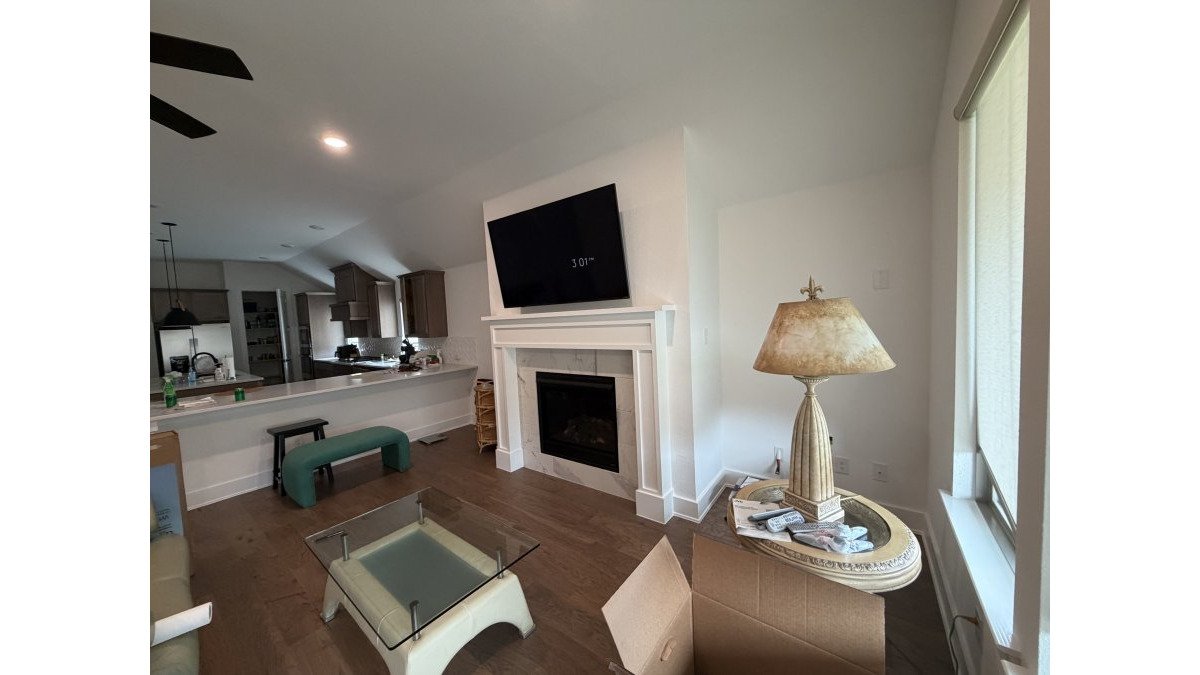
Fixed mounts are the simplest to install and the least expensive to buy. Tilting mounts add a little hardware and are worth it when the TV sits above the viewer's eye line, such as over a fireplace.
Ceiling mounts and specialty brackets fall at the high end; they often need blocking or a different anchoring strategy and take longer to position correctly.
Wall Type and Installation Difficulty: Drywall, Brick, and Concrete
Wall type is the single biggest driver of installation difficulty, and it's the question we ask first. Drywall over wood studs is the most common and the most forgiving.
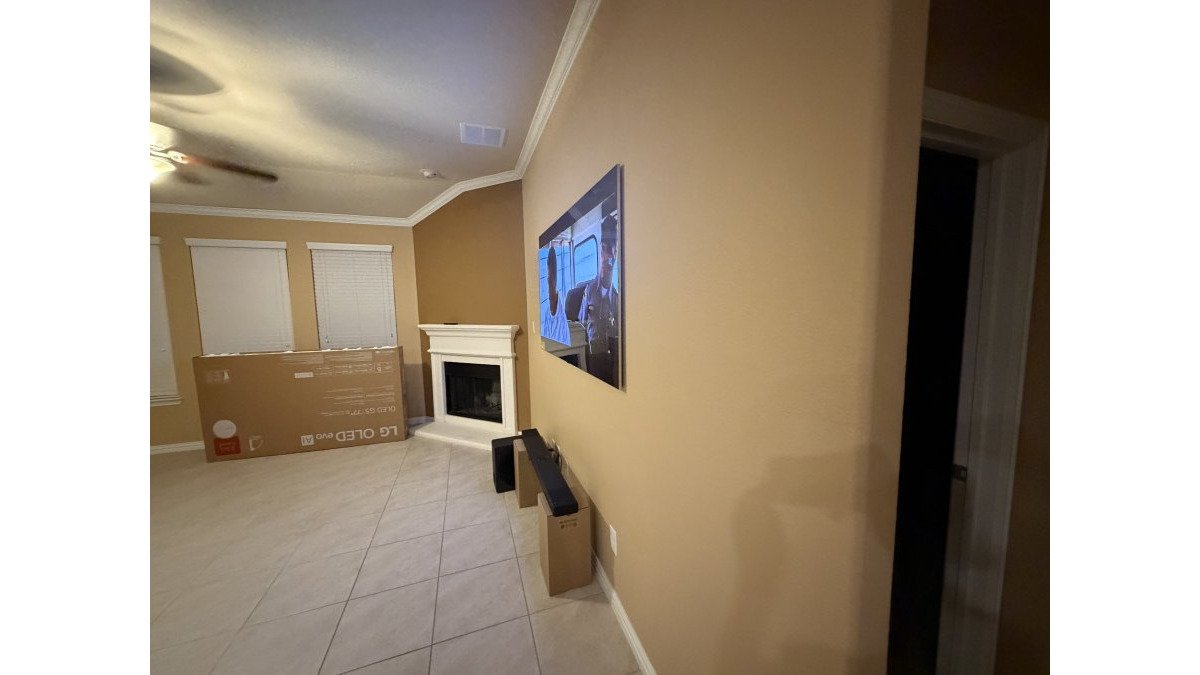
Fireplace installations add their own considerations. The wall may be masonry, the cavity behind it may be shallow, and heat exposure matters. We assess each fireplace individually rather than promising a universal solution.
Hide TV Wires in Wall: Cable Management Costs and Options
To hide TV wires in wall, you have two realistic paths: surface-mounted raceways that conceal cables on the outside of the wall, or in-wall routing that fishes cables through the cavity.
Surface raceway is the budget option: a plastic channel that mounts to the wall and holds the cables, often installable without opening the drywall. The trade-off is visible hardware.
In-wall routing is what most people picture for a clean install. The technician cuts openings, fishes HDMI and other low-voltage cables through the stud cavity, and installs a wall plate or media box behind the TV. This is where cable type matters:
- Low-voltage cables such as HDMI, Ethernet, and speaker wire can typically be routed in-wall by an AV installer
- Line-voltage wiring for a new outlet is electrical work and should go to a qualified electrician
If your goal is a completely cord-free look, budget for both the cable routing and any electrical work needed to get power behind the TV.
How Long Does TV Mounting Take?
How long does TV mounting take? A basic single-TV install on drywall typically takes about one to two hours.
Here's a realistic breakdown of what affects the clock:
- Standard drywall hang, fixed mount: shortest job, one technician
- Tilting or full-motion mount: add time for assembly and leveling
- Brick or concrete: add time for drilling and anchoring
- In-wall cable routing: the largest time add-on
- Soundbar or surround sound: adds a separate setup step
Large TVs, roughly 75 inches and up, usually need two technicians for safe lifting and positioning regardless of wall type. That's a safety requirement, not an upsell.
A good installer will give you a time window when they quote, and they'll tell you what could extend it.
DIY vs. Professional Installation: Pros, Cons, and Hidden Costs
DIY TV mounting is cheaper on paper and riskier in practice.
DIY pros: no labor fee, full control of timing, and a sense of accomplishment if it goes well.
Professional pros: correct anchoring for your wall type, proper leveling, safe handling of large panels, and cable work done in one visit.
Professional cons: you pay for labor, and quality varies by provider, which is why vetting matters.
How to Compare Quotes and Questions to Ask
Comparing quotes fairly means comparing scope, not just totals. The lowest number is often the least complete, and the difference usually sits in cable management, anchoring, and whether the provider is insured and accountable for the work.
Read the quote in this order
- Scope first. What wall type is assumed? What mount type is included? Is cable routing in or out? A quote that does not state these is not comparable to one that does.
- Line items second. A good quote separates labor, mount hardware, cable work, electrical, and any trip fee. A single lump sum is harder to compare and easier to inflate later.
- Exclusions third. Look for what is explicitly not included, masonry drilling, outlet installation, second TV, old TV disposal. Exclusions are where surprise charges live.
- Terms last. Insurance, warranty on the work, payment timing, and cancellation policy.
Red flags in a written quote
- No mention of wall construction anywhere in the document
- A mount listed without a model or type
- Cable management described only as "cleanup"
- No time window and no statement of what could extend it
- No named point of contact or business address
Questions to ask every provider
- Is the quote itemized into mount, labor, cable work, electrical, and any trip fee?
- Does it state the mount type and whether hardware is included?
- Did they ask about wall construction before quoting?
- Is in-wall cable routing included, or priced separately?
- If electrical work is needed, who handles it, and are they qualified for line-voltage work?
A simple way to compare two quotes
Put both quotes side by side and cross out any line only one includes. What remains is the true comparison. If one quote is lower only because it omits cable routing or assumes drywall when your wall is brick, the gap is scope, not savings. A fair quote reflects the actual work, and a provider who walks you through their line items before you book is usually the one who will also walk you through the install.
Frequently Asked Questions
How much does it cost to have a TV professionally mounted?
The cost of professional TV mounting service varies based on TV size, mount type, wall material, and add-ons like cable concealment. Basic drywall installations with a fixed mount are at the lower end, while large TVs on brick or concrete with full-motion mounts and in-wall cable routing cost more. For an accurate estimate, request a free quote from a local installer like All Around Technologies LLC.
What factors affect the cost of professional TV mounting?
Key factors include TV size and weight, mount type (fixed, tilting, full-motion), wall construction (drywall, brick, concrete), whether you need cable management or an electrical outlet added, and the number of TVs. Installation difficulty, such as mounting on a fireplace or high wall, also affects labor. Always ask for an itemized quote so you can see what drives the TV mounting cost.
Does a TV mounting service include the wall mount?
Most professional TV mounting services charge for labor separately from the mount itself. Some installers supply the mount as part of a package, while others require you to provide one or offer it at an additional cost. Clarify this upfront. At All Around Technologies LLC, we can discuss mount options and include the hardware in your quote so there are no surprises.
Does hiding TV wires in the wall cost extra?
Yes, hiding TV wires in the wall typically adds to the TV installation cost because it requires additional labor, materials like in-wall cable kits, and sometimes patching drywall. If an electrical outlet needs to be added or relocated, a licensed electrician may be required, which is a separate cost. Discuss your cable management preferences during the quote to get an accurate estimate.
Does mounting a TV on brick or concrete cost more?
Mounting on brick or concrete usually costs more than drywall because it requires specialized anchors, drills, and more time to ensure a secure installation. The labor is more intensive and there is a higher risk of damage if not done correctly. Professional installers account for wall type in their quotes, so be sure to mention your wall material when requesting a TV wall mount installation estimate.
How long does professional TV installation take?
A basic TV mounting on drywall with a fixed mount typically takes 1 to 2 hours. More complex installations, such as full-motion mounts on brick, in-wall cable concealment, or multiple TVs, can take 3 to 5 hours or more. Scheduling and site conditions also affect timing. Ask your installer for a time estimate based on your specific setup.
Is it worth hiring a professional to mount a TV?
For many homeowners, yes. Professionals ensure secure installation, proper leveling, and safe cable management, reducing the risk of damage to your TV or wall. If you have a large TV, unusual wall material, or want hidden wires, professional service saves time and avoids costly mistakes. For simple setups, DIY is possible, but weigh the risks and your comfort level with tools.
Can a TV power cord be hidden inside a wall?
No, you should never run a standard power cord or extension cord inside a wall. Electrical codes require line-voltage wiring to be installed by a qualified electrician, often using a dedicated outlet or in-wall power kit designed for that purpose. Low-voltage cables like HDMI and speaker wire can be routed in-wall. Always consult a licensed electrician for electrical work to ensure safety and compliance.