 How-to
7 Steps to Running Cables Through Old Walls
Quick Summary
To run cables through old walls, first identify the wall type, such as drywall, plaster and lath, or masonry, and scan for hidden hazards like pipes and live wiring. Then mark top and bottom access holes, feed a fish tape or rod through the cavity, attach low-voltage cable, and pull it through.
- Confirm your wall type before drilling, since plaster, masonry, and balloon framing change the method.
- Scan for studs, live AC wiring, and pipes, and mark every hit before cutting.
- Keep low-voltage cable like HDMI and Ethernet separate from line-voltage electrical wiring.
- Pull the cable by its jacket, not the connector, to avoid damaging the plug.
- Test the connection before sealing the wall and label both cable ends.
Table of Contents
- What You'll Need Before You Start Running Cables Through Old Walls
- Checking Your Wall Type and Construction Before Drilling
- How to Fish Wire Through a Wall Step by Step
- Cable Fishing Tools and When to Use Each One
- Running HDMI Cable Through Wall Cavities the Right Way
- Running Cables Through Plaster Walls and Lath
- Scheduling a Professional Cable Installation at Your Home
- Frequently Asked Questions
7 Steps to Running Cables Through Old Walls
Last Updated: November 1, 2026
What You'll Need Before You Start Running Cables Through Old Walls
Running cables through an old wall is a common project for homeowners who want a clean TV setup. Homeowners in Royse City, Rockwall, and across the DFW area often want a clean TV setup without opening up the whole room. With the right tools and a careful plan, you can do it without tearing everything apart.
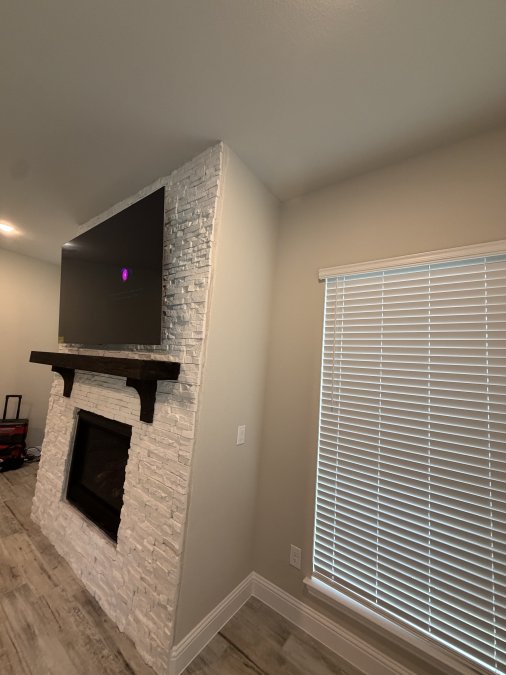
Plan on a few basic items before you touch the wall:
- A stud finder and a small pencil for marking
- A fish tape or fiberglass rods
- A flexible drill bit or a spade bit, plus a drill
- Painter's tape to mark your access holes
- A flashlight and a shop vacuum for dust
- The low-voltage cable you plan to run, such as HDMI, Ethernet, or speaker wire
Keep your cable runs separate from line-voltage electrical wiring. HDMI, Ethernet, and speaker wire are low-voltage. Standard power cords and extension cords should never be run inside a wall. If you find existing electrical wiring, stop and call a licensed electrician.
Checking Your Wall Type and Construction Before Drilling
Before you drill, learn what is inside the wall. Old homes often differ from the 16-inch-on-center drywall construction many homeowners expect, and the difference can change your tools, your access holes, and your route.
Identify the wall assembly first
Look at a cutout, an outlet box, or a closet penetration to confirm what you are working with:
- Drywall over wood studs. The easiest case. Studs are usually 16 inches on center, cavities are open, and a fish tape or rods move freely unless there is a fire block.
- Plaster and lath over wood studs. Common in pre-1950s homes. The plaster is brittle, the lath strips run horizontally, and the cavity behind is often narrower and full of debris. Drilling can crack plaster well beyond the hole.
- Masonry or brick. Solid walls have no cavity to fish. Cable must run in surface raceway, conduit, or a furred-out space, or the wall needs a new chase.
- Balloon framing. In older two-story homes, exterior wall cavities can run uninterrupted from the basement to the attic. That sounds convenient, but those cavities often contain fire blocking at each floor line and may hide old knob-and-tube wiring.
- Insulated exterior walls. Blown or batt insulation can block a fish tape, and pulling cable through it can compress the insulation and reduce its performance.
Check for hidden hazards before you cut
A non-contact voltage tester run across the wall surface is a start, but it is not a substitute for a careful check. Before any cut or drill:
- Scan the wall with a stud finder that also detects live AC wiring, and mark every hit.
- Look for outlet, switch, and plumbing penetrations above and below your planned route, pipes and cables often run straight between them.
- Check the opposite side of the wall and the basement or attic for what enters the cavity.
- Tap gently to tell hollow cavity from solid framing, blocking, or masonry.
- If you are unsure whether a hit is a pipe, a cable, or a fire block, stop and investigate before drilling.
Expect fire blocking and irregular framing
Old walls frequently have horizontal fire blocking, solid wood between studs at mid-wall or floor lines, that stops a fish tape cold.
If the wall is an exterior wall, expect insulation and air sealing to be disturbed. Plan your patch and seal work before you start, not after.
If any part of the route involves line-voltage wiring, a permit, or a code question, have an appropriately qualified electrician review it. Low-voltage HDMI, Ethernet, and speaker cable are a different category, but they still should not share a cavity carelessly with power wiring.
How to Fish Wire Through a Wall Step by Step
Once you know your wall type, you can start the fishing process. The basic steps are similar across walls, but old construction adds decision points that decide whether the pull succeeds.
Choose your method by wall type and cable purpose
Before you cut, pick the approach that fits the job:
- Drywall, open cavity, low-voltage cable (HDMI, Ethernet, coax, speaker wire): fish tape or fiberglass rods from a top opening to a bottom opening. This is the standard case.
- Plaster and lath: drill small pilot holes and work between lath strips where possible. A thin flexible rod usually beats a stiff fish tape, which can catch on lath and crumble plaster.
- Masonry or brick: do not attempt to fish a solid wall. Use surface raceway or conduit, or plan a furred-out chase.
- Insulated exterior cavity: expect resistance. A rod with a rounded tip pushes through batt insulation better than a flat tape, but confirm the insulation is not left compressed around the cable.
- Line-voltage wiring: this is electrician work. Do not fish standard power cords or extension cords through a wall, and do not treat a low-voltage route as permission to run mains cable.
The step-by-step pull
- Mark your access holes. Measure the height of your TV or outlet, then mark the top and bottom openings. Keep them level and aligned with the cavity, not just with a stud.
- Cut or drill the openings. Use a small hole for the fish tape and a larger one for the cable connector or wall plate. Keep holes as small as the connector allows.
- Feed the fish tape or rod. Push from the top opening down through the cavity. Check that it moves freely and does not catch on framing or a fire block.
- Attach your cable. Tape the low-voltage cable to the end of the fish tape with electrical tape, keeping the pull force on the jacket rather than the connector.
- Pull the cable through. Pull steadily from the lower opening while feeding slack from the top. Do not force the cable past a block.
- Test before sealing. Run a quick signal test or check the connection before you close the wall.
- Patch and seal the holes. Patch drywall or plaster, and seal penetrations in exterior walls to preserve air sealing.
Troubleshoot a failed pull
A snag is normal in old walls. Work through these before you open a bigger hole:
- Fish tape stops partway: you likely hit a fire block, a brace, or a diagonal brace. Try a different horizontal position, or confirm the obstruction can be drilled safely before you do.
- Tape catches and will not release: do not yank. Reverse gently and try a rod with a rounded tip.
- Cavity is blocked by insulation or debris: switch to a stiffer rod or consider an alternate route through the attic or basement.
- Top plate is inaccessible: route through an adjacent closet, a soffit, or a basement instead of forcing the original path.
- Repeated failures: a larger access opening, a low-voltage mud ring or a small drywall patch, is often faster and cleaner than fighting a blocked cavity.
For a full walkthrough of the same process, see our guide on hiding TV wires in a wall at hide TV wires in wall guide.
Cable Fishing Tools and When to Use Each One
Different tools work better in different walls. Here is a quick comparison of what we typically use:
| Tool | Best For | Works Well In | Limitations |
|---|---|---|---|
| Fish tape | Open cavities with few obstacles | Drywall, hollow wall spaces | Can snag on blocks |
| Fiberglass rods | Longer runs and bends | Drywall and plaster | Needs a clear path |
| Flexible drill bit | Drilling through studs | Wood framing | Requires a drill with room |
| Spade bit | Larger holes for connectors | Top and bottom plates | Too large for small cables |
| Magnetic pull tool | Metal stud or plate areas | Metal framing | Not for all walls |
Choose the tool that fits your wall, not the one you own. Old plaster walls often need a different approach than newer drywall.
Running HDMI Cable Through Wall Cavities the Right Way
HDMI cables are often the hardest to pull because they are thick and stiff. Plan for the cable's diameter and bend radius before you start.
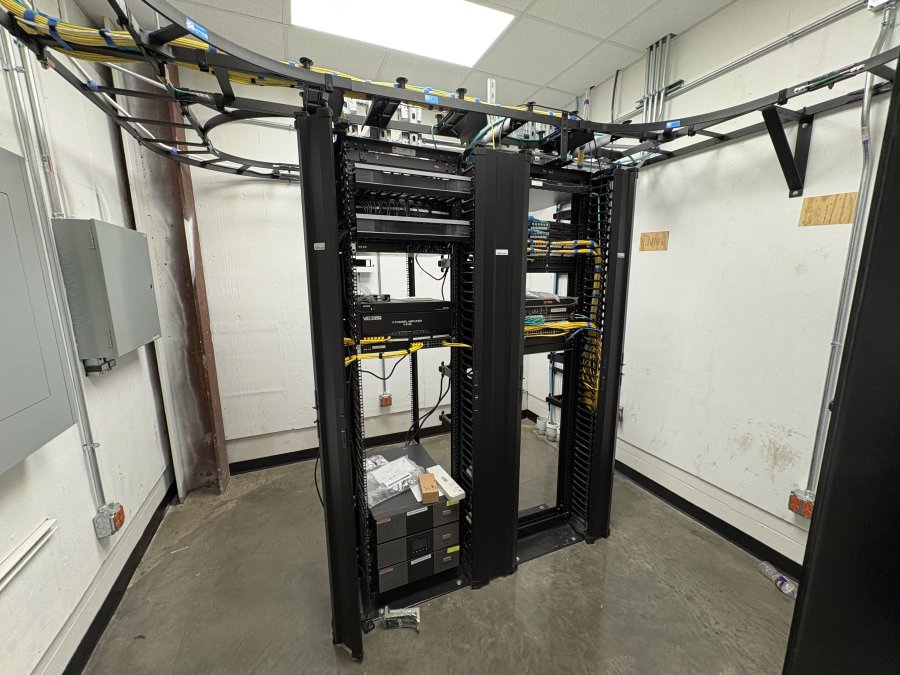
Keep these tips in mind:
- Use an in-wall rated HDMI cable, often labeled CL2 or CL3 for fire-rating purposes
- Avoid sharp bends. Keep curves gentle and wide
- Pull the cable with a fish tape rather than the connector end
- Leave a few extra inches at each end for connections
- Label both ends so you know which goes where
A common mistake is pulling the HDMI connector through the wall. This can damage the plug or the cable. Attach the cable so the pull force goes through the jacket.
Running Cables Through Plaster Walls and Lath
Plaster and lath walls are more fragile than drywall. The plaster can crack or crumble if you drill too close to the edges.
Here is how we approach these walls:
- Drill small pilot holes first to check the cavity
- Work between lath strips instead of through them when possible
- Use a thin flexible rod for tight spaces
- Expect dust and plaster debris, so cover the floor
- Patch with plaster or a compatible patching compound
Old houses also have uneven framing. If you hit a solid obstruction, do not force it. Move your opening a few inches and try again.
Scheduling a Professional Cable Installation at Your Home
Some wall jobs are simple. Others involve old construction, multiple cable runs, or wall types that need extra care. If you would rather have a professional handle the work, All Around Technologies LLC provides professional technology installation for homes in Royse City and the surrounding area.
To learn more about what a professional installer can handle, see our TV mounting service page or our professional TV mounting overview, which explains mounting options and wire concealment.
Contact All Around Technologies LLC to schedule a visit and get a clear plan for your home.
Last Updated: November 1, 2026
Frequently Asked Questions
How do you run cables through an existing wall?
Start by identifying the wall type, locating studs and any existing wiring or plumbing, and choosing your access points. Cut small access holes at the top and bottom of the run, then use a fish tape or fiberglass rod to pull the cable between them. Keep the cable routed away from electrical wiring and plumbing. For longer or more complicated runs, a professional installer can help plan the job.
Can you run HDMI or Ethernet cables inside a wall?
Yes. HDMI, Ethernet, coaxial, and speaker wire are low-voltage cables and are commonly run inside walls. They should stay separated from line-voltage electrical wiring. Use cables rated for in-wall installation, such as CL2 or CL3 ratings where applicable, and avoid running them in the same cavity or bundled with power cords. If you are unsure about cable ratings or local requirements, ask a qualified installer.
What tools do you need to fish cables through a wall?
Most projects call for a stud finder, a drill with spade and flexible bits, a fish tape or fiberglass rods, a flashlight, painter's tape, and a utility knife. A wall plate or cable fishing kit helps with neat access points. The right tool depends on the wall construction and whether there are obstructions such as fire blocks or horizontal beams.
When should you hire a professional to run cables through a wall?
Consider hiring a professional if the wall contains plumbing or electrical wiring you cannot identify, if the wall is plaster and lath or has unusual cavities, if you need to run cables across multiple floors, or if the job involves any line-voltage work. Professionals at All Around Technologies LLC can help with TV mounting, home theater, security camera, and network projects in Royse City and nearby communities.